The Importance of CAD/AVL for Transit Agencies
Imagine a bus on a busy city route during rush hour. Due to heavy traffic the vehicle begins falling behind its scheduled arrival time. Somewhere, a dispatcher needs to know before passengers start piling up at the next stop.
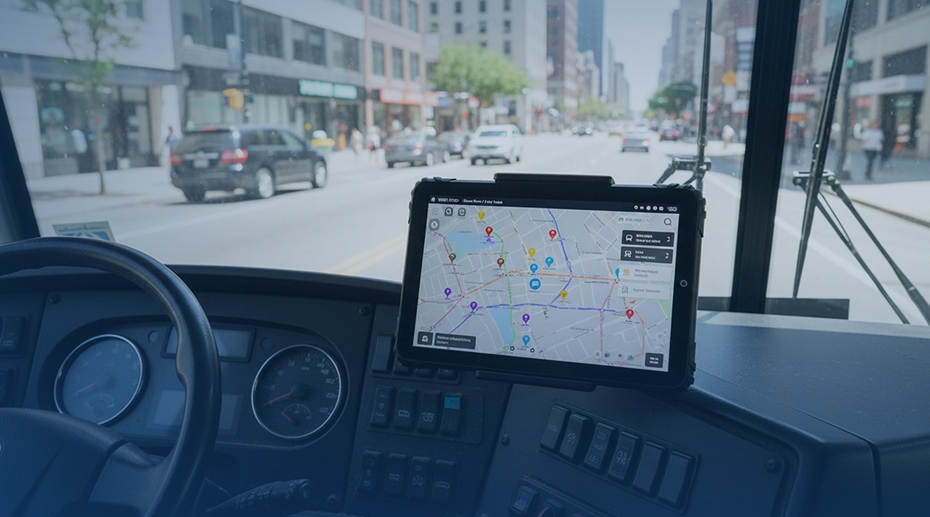
With the AVL system, its GPS location is constantly reported to the transit agency’s control center, allowing the dispatchers to see that the vehicle is running behind schedule and identify where the delay is occurring.
When they are using the CAD system, they can talk to the driver, evaluate the situation and respond accordingly. At the same time if the system is integrated with passenger information displays or mobile applications, updated arrival time can be shared with passengers waiting at upcoming stops.
Understanding CAD/AVL Systems
CAD/AVL systems combine real time vehicle tracking with dispatch software, allowing transit agencies to monitor and manage their fleets.
Computer-Aided Dispatch (CAD) helps transit agencies manage communication and coordination between drivers and dispatchers. It provides tools for communicating important information and responding to delays or unexpected changes.
Automatic Vehicle Location (AVL) is about identifying and tracking real time location of vehicles. GPS technology is used to collect vehicle location data from AVL systems which then are fed into a central system where the back end can monitor fleet activity.
CAD and AVL together give transit agencies a view of what is happening across their operations. AVL tells dispatchers where vehicles are so CAD can be used to coordinate and manage services based on that information.
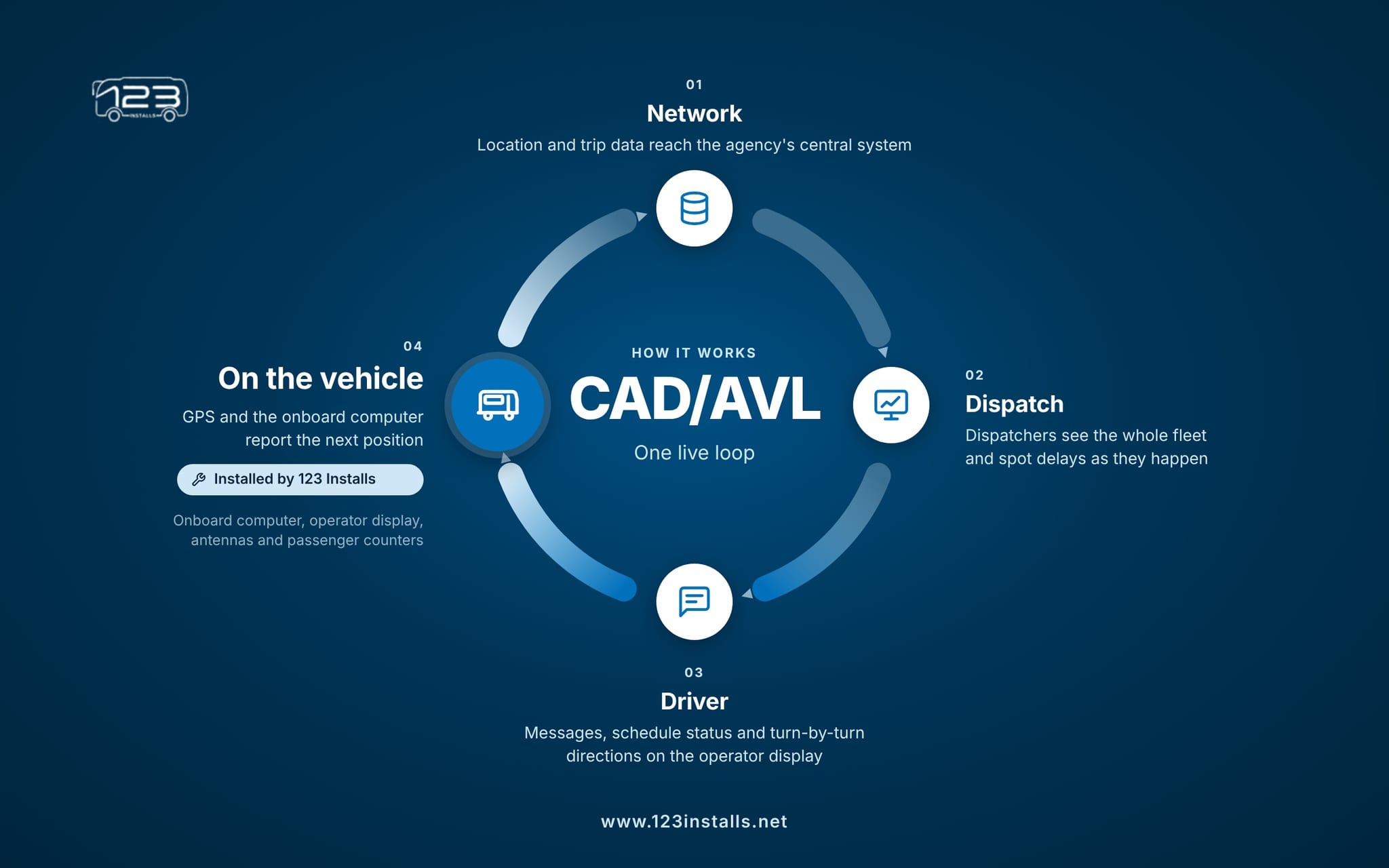
How do CAD/AVL Systems Work?
Each vehicle has onboard technology (GPS and onboard computer). The GPS receiver shows where the vehicle is located, while the onboard equipment can collect other operation information. The information collected is sent to the transit agency’s central system via wireless communication networks so that the location of the vehicle and other data are updated and shared with the control center. The dispatchers get an overview of fleet activity and potential delays or disruptions.
When there is an issue, dispatchers can use CAD tools to get in touch with drivers and give instructions. Through this process, CAD/AVL systems help connect vehicles, drivers and dispatchers together into a more coordinated system.
CAD/AVL and APC Installation in New Orleans
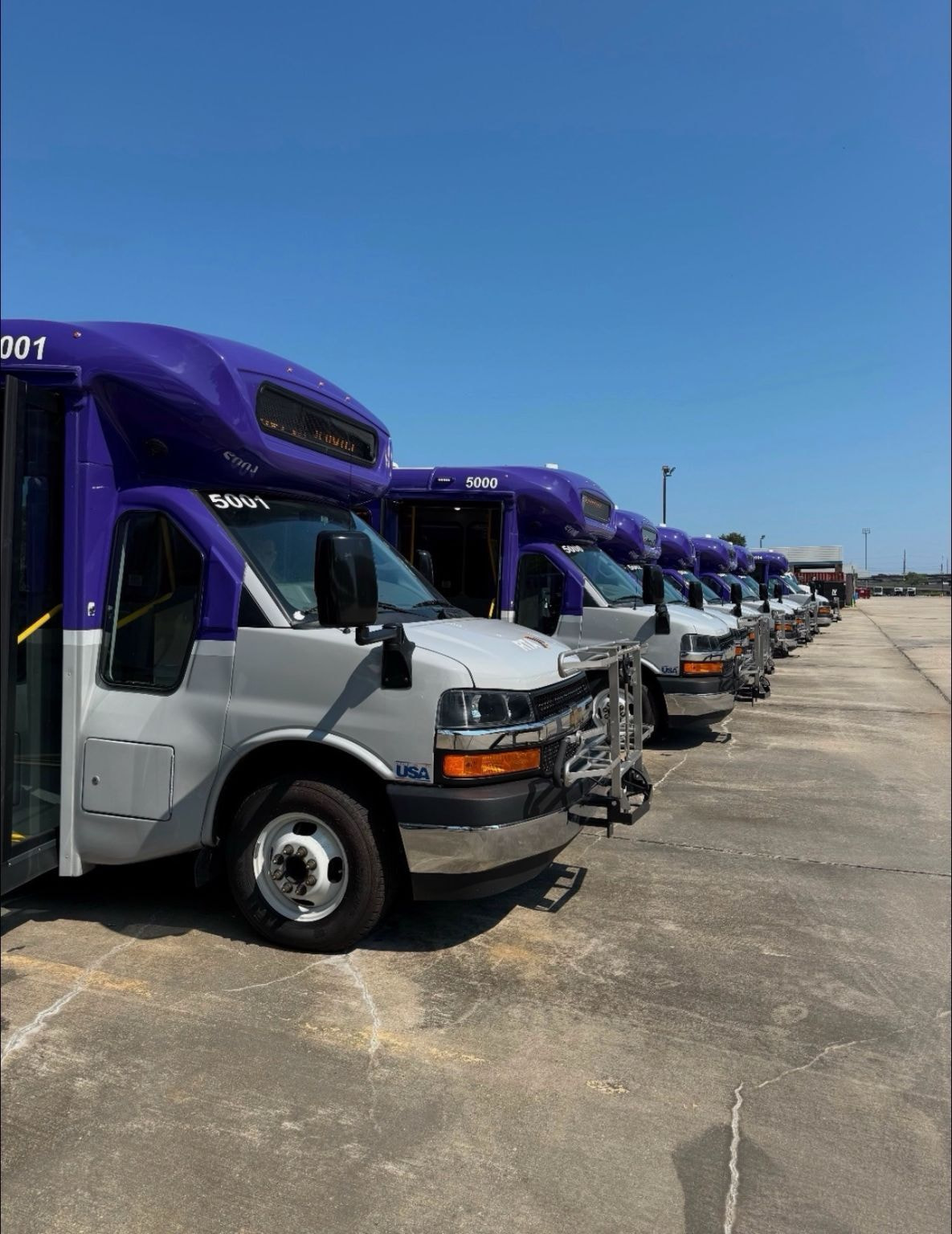
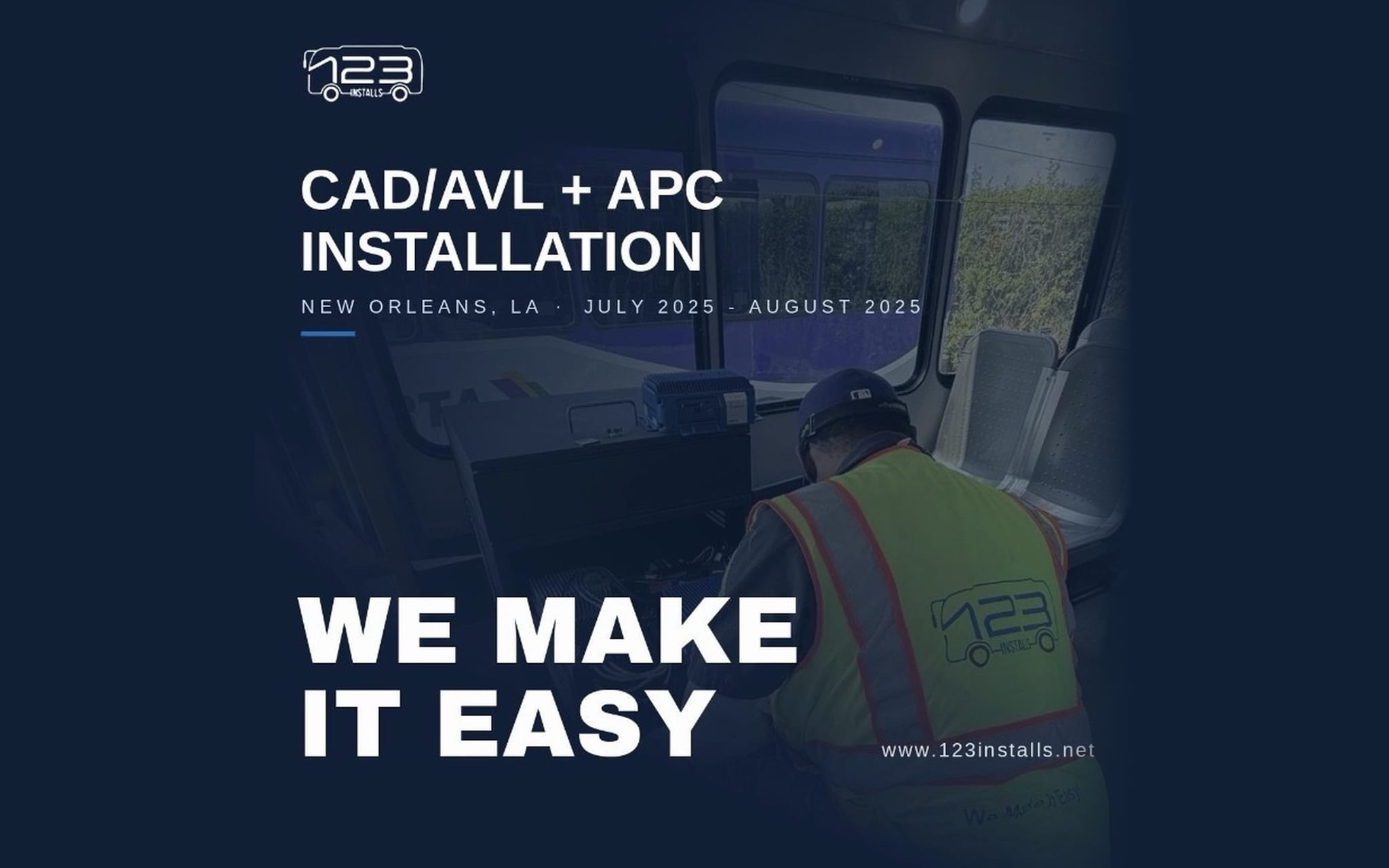
123 Installs completed a CAD/AVL and APC installation project in New Orleans, Louisiana, supporting the city's public transport modernization.
Carried out between July and August 2025, this project helped agencies improve real time vehicle tracking, dispatch communication and fleet monitoring.
Moving Public Transportation Forward
As public transportation continues to advance, technologies like CAD/AVL are becoming more and more important in supporting everyday transit operations. These systems help agencies gain better control over their daily services.
Successful technology implementation goes beyond the systems themselves. The right equipment, proper installation and technical expertise are essential to bringing these solutions into everyday use.
At 123 Installs, we make it easy.